

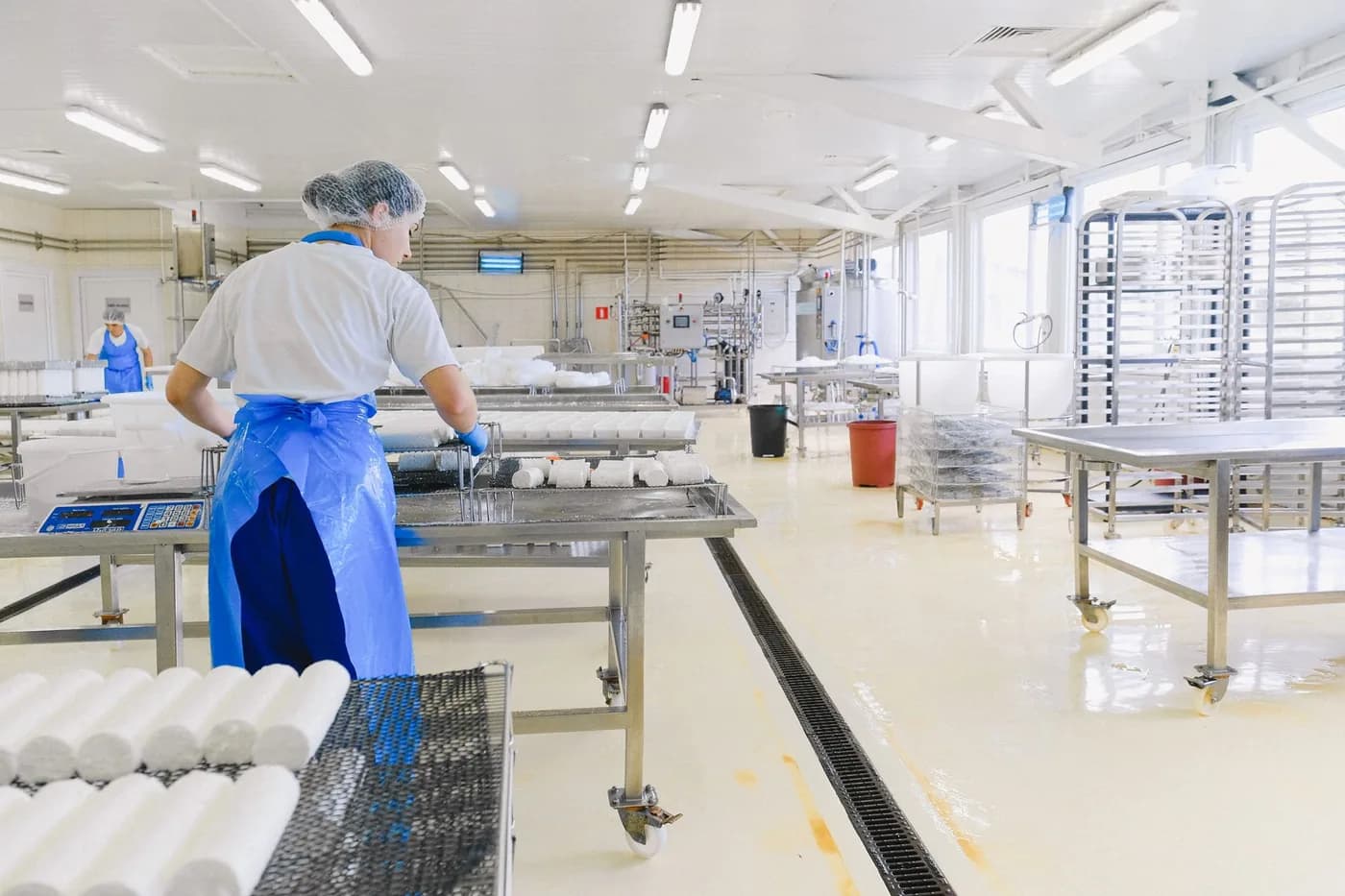
One plant, twenty-plus hires, line staff to finance.
A food manufacturer, Greater Toronto Area
A plant that came for line staff and left with a hiring program: production, skilled trades, quality, then the office roles that keep a plant running.
- 20+people hired
- 18months as their recruiting partner
- 3kinds of roles: line, trades, office
The plant was growing faster than its hiring. Lines ran short on second shift, a millwright seat had sat open for months, and the HR team was spending its week sorting applicants from job boards instead of interviewing the few who fit.
Every role was urgent and every role was different: production operators who could hold a line speed, 433A millwrights with food-plant experience, quality technicians who knew HACCP paperwork, and, once the floor was stable, an accountant and an HR generalist for the office.
We started on the floor, not in a job description. A walk through each line with the supervisor gave us the real specification for every role: the shift, the line, the pace, the certifications that mattered and the ones that did not.
From there the plant stopped seeing applicants and started seeing shortlists. Two or three pre-screened people per role, each already asked the questions the supervisor would ask, each already clear on the shift and the pay. For line roles we kept a standing bench, so a resignation on Friday had a candidate on Monday.
Trades and quality came next, then the office. The same intake, the same shortlist discipline, a different screen for each.
The parts of the method that did the work.
- 01
Specs written per shift and per line
A production operator on a packaging line at night is a different hire from one on a cutting line at six in the morning. We wrote them separately and recruited them separately.
- 02
A standing bench for the roles that churn
Line roles turn over. Keeping four or five screened people warm at all times meant the plant never ran a line short for more than a shift or two.
- 03
Trades screened by the floor, not the ticket
Every 433A millwright holds the same licence. We screened for food-plant conditions: washdown, stainless, line speed, sanitation windows.
- 04
One partner across the whole org chart
Once the floor was stable, the same recruiter team filled quality, finance and HR. The plant kept one point of contact and one standard.
More than twenty hires in eighteen months, from production operators to a payroll and HR generalist, with the plant's time to hire measured in days rather than months for the line roles.
The HR team got its week back. The hiring process we built, the specifications, the screens and the bench, is the one the plant still runs.
- Production operators
- Line leads
- Production supervisors
- 433A millwrights
- Quality technicians
- Sanitation leads
- Accountant
- HR generalist
If you are hiring for roles like these.
- Write the role as the shift sees itPay, line, start time, pace. Vague postings bring volume; specific ones bring the right people.
- Keep a bench for the roles that churnIf a role turns over every few months, the search should never start from zero.
- Sequence the hiringStabilize the floor first. Office roles are easier to fill and easier to keep once production is predictable.
- Measure time to hire, by roleIt is the number that tells you whether the process works. We bring it down first.
Hiring in manufacturing? Get a guide for the exact role and city.
Title, city, one business day. What they are paid, where the people come from, who else is hiring them, and how to fill the seat. Written for your role by a recruiter, not pulled off a shelf.
The people they needed to grow.
A global automotive components manufacturer, Ontario
55+ positions filled
Fifty-five-plus placements over four years, across six departments.
Read the case studyA material handling and industrial automation manufacturer, Ontario
30+ roles filled
Thirty-plus engineering and manufacturing hires in three years.
Read the case studyA specialized materials manufacturer, Orillia, Ontario
7 functions recruited for
Specialist roles filled in a town where the skills did not live.
Read the case study
Short a millwright or a line lead on second shift?
Pick a time and a Traverse recruiter will talk through the role, the shift and what good looks like on your floor.
One GTA plant hired 20+ people through Traverse in 18 months, line staff to finance.
Loading the calendar…
Open it in a new tab insteadPrefer to talk?416-274-3978recruitment@traversestaffing.com